Manufacturing PLI and Make in India.
How government incentives are turning India from an importer to a global builder.
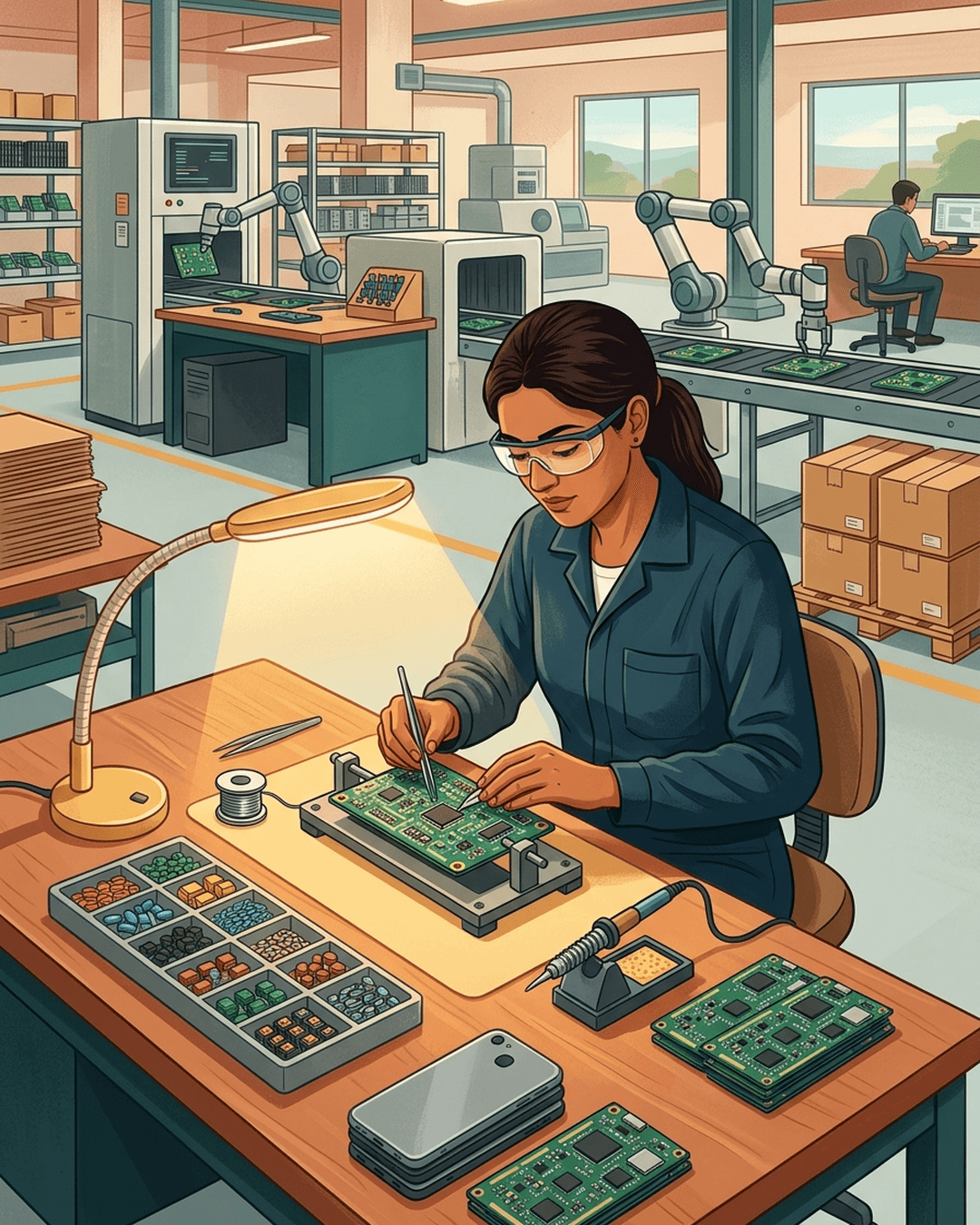
A taxi driver in Mumbai turns over his new smartphone, pointing to the tiny print on the back. For years, every screen and battery he touched came from thousands of miles away. Today, the box says it was assembled in a factory just outside Chennai.
For decades, India bought finished goods from other nations. We sent our rupees abroad, and imported everything from mobile phones to medicines. Now, the government wants to change this by paying companies to manufacture goods locally. This plan is called the Production Linked Incentive, or PLI.
Think of it as a factory owner who gets a cash bonus from the landlord every time he produces extra goods. The government pays companies a percentage of their incremental sales. It is not a free handout for setting up a factory; they only get paid when they actually make and sell the goods.
This bonus helps companies build massive factories, buy raw materials in bulk, and lower their costs. When costs go down, these Indian factories can finally compete with global giants. For you as an investor, this means certain companies get a government-backed boost to their profit margins.
Building a fortress with government help
Imagine a Shivaji fort. To survive attacks, the fort needs a wide trench and high stone walls to keep competitors away. In business, we call this a moat. Setting up a manufacturing plant is expensive and risky, leaving companies vulnerable. The PLI scheme acts like a temporary construction crew paid by the king. It helps companies build their fortresses faster and cheaper. Once the walls are up and the cost advantage is secured, the company has a strong moat that protects its business for years.
Why this matters
When you look at your portfolio, remember that government policy can create overnight winners. A company that wins a PLI approval receives a direct cost advantage over its rivals. It is like running a race where the government gives one runner a head start. If you own shares in companies that can scale up production and claim these incentives, your wealth grows alongside India's manufacturing rise.
Where people go wrong
- Buying weak businesses for subsidiesA bad business does not become good just because the government offers a cash bonus. Look for strong managements first.
- Expecting instant profit growthSetting up factories takes years. The upfront capital expenditure is heavy, and benefits only flow after production begins.
- Ignoring execution risksDelays in land acquisition or supply chains can cancel out the benefits of government incentives.
PLI pays cash incentives to companies that increase their domestic production.
Look for companies with approved PLI status to find cost advantages.
Heavy upfront setup costs mean profits take years to show up.
Do not mistake a government subsidy for a business moat. A helper who builds your wall is not the same as a wall that stands on its own.